
Nashville Home Inspection | Middle Tennessee
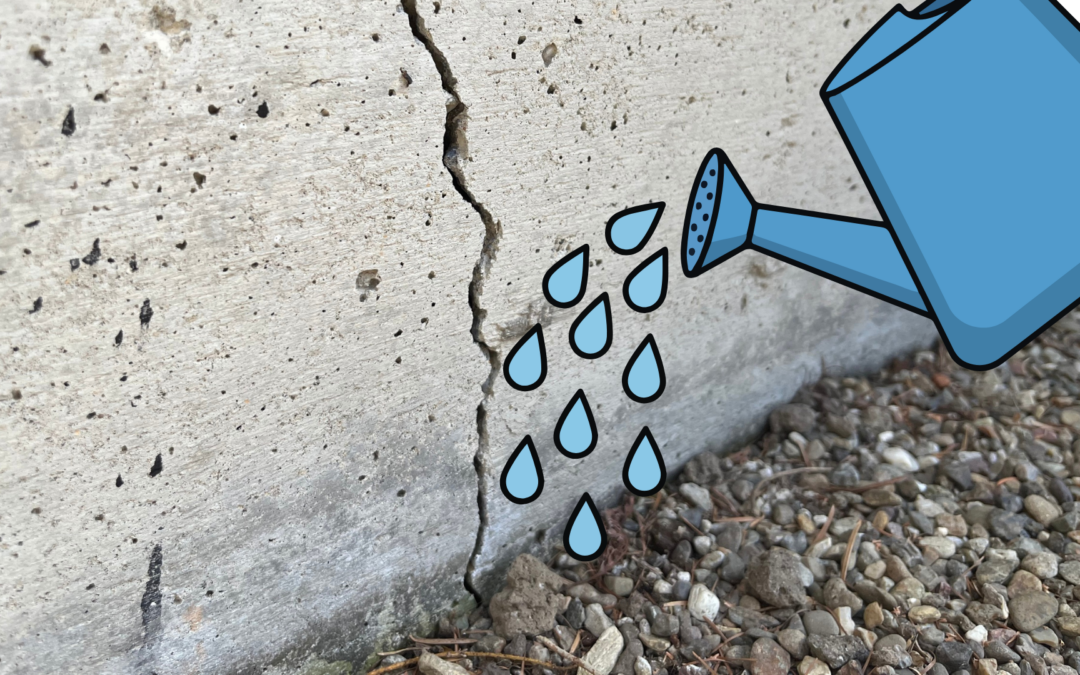
If you follow home improvement channels online, you have likely run into a bizarre piece of viral advice: the idea that during a hot, dry Middle Tennessee summer, you need to stand outside and “water” your house with a garden hose to prevent the foundation from crumbling.
When a bad drought hits, the ground bakes, the grass dies, and people start panicking about their homes. But as professional home inspectors who look at foundations daily, we have a quick reality check for you: your foundation is not a plant. You do not need to water it.
Let’s break down the science of why your concrete isn’t going to melt in the summer sun, and what you actually need to watch out for when it comes to moisture and your foundation.
The Myth: Concrete Crumbling in the Sun
The internet rumor mill claims that if a concrete foundation gets too dry for too long, it will lose its structural integrity, dry out completely, and start to crumble into dust.
This is fundamentally false.
Modern home foundations, whether concrete blocks or a poured concrete slab, are made using a powerful binding agent called Portland cement. The way Portland cement works is a one-way chemical reaction called hydration. When water is mixed into the concrete during construction, it cures and hardens to a permanent state of rock-like density.
Once concrete is fully cured, a hot Tennessee summer cannot reverse that process. It doesn’t need a steady diet of water to stay solid, and a lack of rain will not cause the foundation itself to lose structural integrity or spontaneously break apart.
The Origin of the Trend: Shrink-Swell Soil
If watering your concrete is pointless, where did this trend come from? It actually comes from the behavior of the soil surrounding the home, not the concrete itself.
Middle Tennessee is famous for having limestone-derived clay soil. Clay is highly expansive, meaning it behaves like a giant sponge:
- In the winter and spring: The clay absorbs heavy rainfall, swells up, and expands.
- In a dry summer: The clay loses moisture, shrinks dramatically, and cracks.
In some extreme climates with incredibly deep clay beds (like parts of Texas), severe soil shrinkage can cause the ground to pull away from a slab so significantly that it creates deep underground voids, leading to foundation settlement. To combat this localized issue, some structural engineers in those specific regions recommend using soaker hoses to keep the perimeter soil from pulling away.
However, in the Nashville area, our clay topsoil layers are often relatively shallow and sit directly over solid limestone bedrock. Pouring hundreds of gallons of water around your perimeter with a garden hose during a drought is generally a massive waste of your water bill.
The Real Danger: What Happens When the Rain Returns?
Whether you are actively watering your yard or letting nature take its course, the real thing you need to focus on is what happens to the water when it finally does arrive.
Our primary goal when evaluating a property is ensuring that water does not pool or collect directly next to a foundation wall.
If you deliberately oversaturate the ground directly against your home during a dry spell, or if your gutters dump massive amounts of water in one spot when a summer storm hits, you create localized soil movement. When clay expands and contracts rapidly in an isolated area, it creates uneven lateral pressure against your foundation blocks, which can cause structural shifting over time.
DILIGENT Checklist: Foundation Care in the Summer
Instead of dragging a hose out to water your concrete blocks this July, focus on these practical, high-impact maintenance items instead:
- Watch the perimeter line: Keep an eye on where the soil meets your house. A minor gap during a dry spell is normal, but large, deep fissures mean the grading could use some topsoil adjustments.
- Maintain your landscaping: The best way to keep soil moisture levels naturally stable around your home is to grow healthy grass, shrubs, or mulch beds. Water your plants normally; their root systems will handle the soil structure naturally.
- Clear your gutters: Summer storms bring heavy downpours. Ensure your gutters are clean and downspouts extend at least 6 to 10 feet away from the foundation wall so water doesn’t flood a single area when it rains.
Your home’s foundation is built to withstand seasonal weather swings. Don’t let internet myths run up your water bill; just keep a close eye on your drainage, and let the concrete do its job!
Experience the DILIGENT Difference
With DILIGENT, you can understand the value of your potential home investment by skipping the guesswork and gathering deeper information about your new home with our detailed reports provided the same day as your inspection.
